
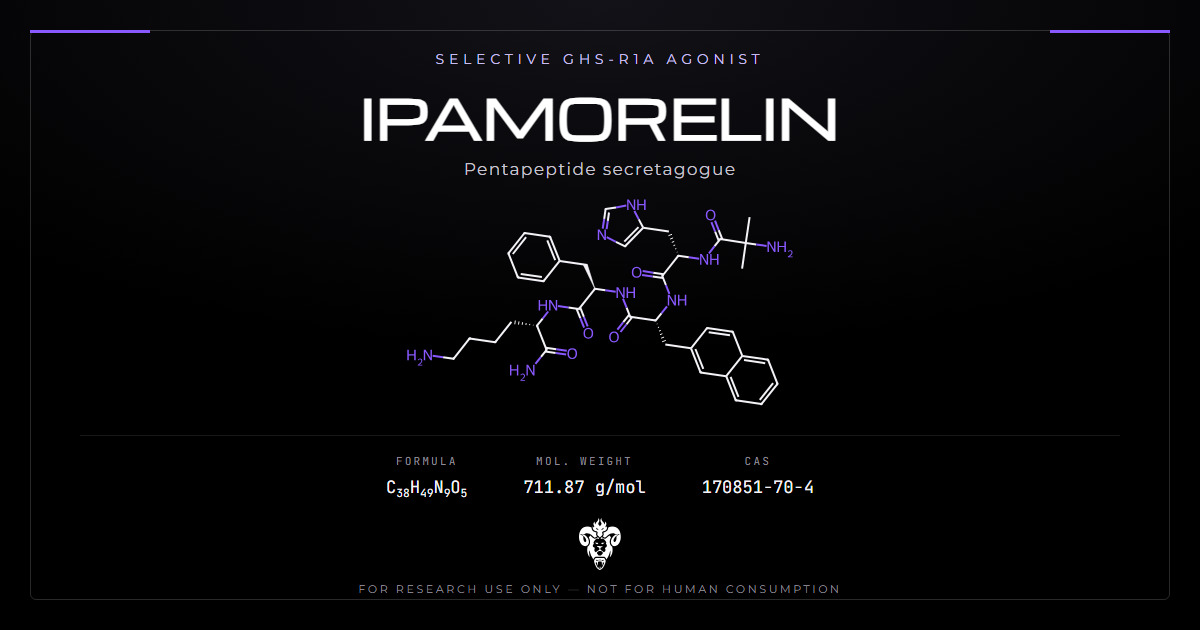
The core focus of modern peptide research is accuracy and precision. Ipamorelin stands out not because it acts broadly, but because of its ability to work selectively. As one of the most receptor-selective growth hormone secretagogues, it focuses on the ghrelin receptor in the pituitary gland to encourage the release of growth hormone, without unwanted activation of cortisol, prolactin and ACTH that other secretagogues often cause.
This level of selectivity enables GH pulse to grow in a controlled, physiologically natural way, while minimizing the hormonal noise and making it a valuable tool in laboratory research. For science innovators who are excited about new discoveries in GH dynamics, tissue repair or metabolic signaling, Ipamorelin offers them a neat and reliable model without risking any off-target effects.
The Shift Towards Selective GH Modulators: Why and How it Happened
If we look back to previous science discoveries, GHS have come a long way since the first compounds were developed. Older secretagogues, like GHRP-6, proved to be effective at stimulating GH release but lacked specificity. As these secretagogues were capable of acting broadly, they usually ended up disturbing several other hormonal pathways apart from GH, like cortisol, prolactin and ACTH. These compounds were helpful in gaining insights, but their off-target effects diluted the results, making experiments less reliable.
On the other hand, the latest secretagogues, like Ipamorelin, marked a shift toward targeted, receptor-selective activity. Unlike older compounds, Ipamorelin binds selectively to the ghrelin receptor in the pituitary, without disturbing other hormones. As a result, scientists achieve more accurate and reliable outcomes, with fewer unwanted interfering factors.
Selectivity is a key factor to ensure that the interpreted results are reliable and accurate. By reducing unwanted effects, Ipamorelin plays an essential role in peptide design, offering a more controlled tool for lab research and staying strictly for research purposes only.
How Selectivity Shapes Dosing
Compounds like Ipamorelin enjoy a high ground because they can easily and positively influence research dosing strategies. Since Ipamorelin binds to the ghrelin receptor only, it becomes easier for researchers to control GH pulses accordingly. Also, researchers can replicate natural GH patterns in animals, which helps them improve the overall relevance of the outcomes.
But the case with broad-acting peptides is different. Off-target hormone spikes can impact timing and effects. For example, high cortisol can influence metabolism, making it difficult to measure GH-specific effects.
Precision also helps maintain reproducibility. When every dose delivers a predictable GH outcome, without causing any unwanted interference, it becomes easier to repeat experiments with similar outcomes.
Selective dosing is helpful in minimizing the risk of complications in animal studies. By avoiding unintended hormone spikes, labs can maintain steady experimental conditions. To sum up, selectivity not only shapes the biology being studied, but it also has a major impact on timing, design and interpretation of research dosing. This makes peptides like Ipamorelin a recommended tool for modern GH research.
The Role of Structure in Controlling Receptor Activity
A peptide’s shape has a huge impact on the receptor it binds to. Researchers name this ‘the structure-activity relationship (SAR)’. Any changes in Ipamorelin’s size and shape can influence selectivity.
Ipamorelin has a unique design that helps it fit into the ghrelin receptor. Due to this precise fit, it triggers growth hormones only without causing any unwanted impact on other hormones. This targeted binding is a key reason why Ipamorelin is known for producing ‘clean’ GH pulse that is reliable, predictable and easier to study in research models.
Knowing about SAR is important for researchers as it shows how a tiny change in peptide design can impact function. By understanding SAR, it becomes easier for researchers to create compounds that are effective, selective and produce reliable results.
To make it even easier, the structure of a peptide is a lot more than just chemical detail. Instead, it maps out how a certain peptide would react in the body. This targeted peptide is a proven example of how a unique design can help researchers achieve precision in results.
Research Examples about Ipamorelin
To gain a better hang on how Ipamorelin works, we’ve penned down a few real-world research studies for you. These experiments represent how the peptide can impact growth hormones and tissues like muscle and bones. Although the experiments were conducted on animals, they offer rich insights into their potential effects.
Bone Growth Experiment in Rats
During a study, rats were given different doses of Ipamorelin 3 times daily for 15 days. As an outcome, a significant bone and body weight growth was noticed. This shows Ipamorelin’s GH-releasing effect has a measurable impact on bone growth and other growth-related parameters in animals. (Source)
Muscle Strength Experiment in Rats
Another experiment was conducted to treat rats with a glucocorticoid, with and without Ipamorelin. The group that was treated using Ipamorelin and glucocorticoid showed improvement in muscle strength. Also, a four-fold increase was noticed in new bone formation, as compared to glucocorticoid alone. (Source)
Gastro‑Intestinal Experiment in Rats
After an abdominal surgery that slowed digestion, rats were given a certain dose of Ipamorelin. A group that took Ipamorelin had quicker stomach emptying than the control group. This targeted peptide also helped stomach muscles to contract even better. (Source)
Limitations and Research-Only Context
Despite positive outcomes, Ipamorelin is a peptide solely used for research purposes and is not approved for human use. This is why this targeted peptide falls under ‘research-only context’. It is used in controlled lab settings to learn about its impact on GH, tissues, metabolism and biological processes. Research-only guidelines make sure that this peptide is used responsibly to extract valuable insights only, without risking anyone.
Cutting it Short
Ipamorelin receptor selectivity has proven to be a great research tool that ensures accurate and precise results. By exclusively binding itself to the ghrelin receptor, it ensures that researchers get clean results, with no unwanted interruption caused by other hormones. This is the reason why Ipamorelin seems to play an important role in next-generation peptide research. While it is still not approved for shelves, it is still trusted by scientists to derive high-quality and accurate data.