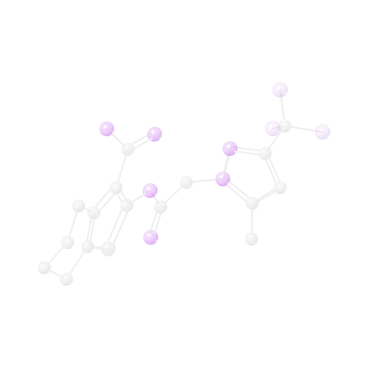
Calculated reference model · not an experimental or batch-certified structure. All 26 atoms shown.
Model data & sources
- Heavy atoms only; hydrogens are omitted from the reference display.
- Source-defined stereochemistry is checked against the calculated coordinates; no energy-minimum, crystal or solution-structure claim is made.
- Reference molecular species only; batch identity, purity, counterions and excipients are not certified.
- Formula
- C16H17F3N4O2S
- Method
- RDKit ETKDGv3 / MMFF94s calculated reference conformer
HBT1 (YDL233C)
HBT1 (YDL233C)
HBT1, also recognized by its screening identifier YDL233C, is a synthetic small-molecule AMPA receptor positive allosteric modulator. The designation YDL233C stems from internal compound indexing during early developmental screenings and does not indicate a yeast origin or any biological derivation. In neuroscience and neuropharmacology research, HBT1 is widely used as a tool compound to investigate the mechanics of excitatory synaptic transmission, cognitive signaling pathways, and long-term potentiation (LTP) models.
Physical & Handling Properties
| Property | Specification |
|---|---|
| Physical Appearance | White to off-white solid |
| Solubility | Soluble in DMSO and common organic solvents; limited aqueous solubility |
| Solution Base | PEG400, DMSO |
Mechanism of Action & Research Utility
HBT1 functions specifically as a positive allosteric modulator of AMPA-type glutamate receptors (AMPAR). Rather than operating as a direct agonist, it amplifies endogenous, glutamate-mediated AMPAR signaling. This distinct heterocyclic scaffold allows investigators to explore targeted receptor-ligand interactions and central nervous system penetration dynamics in experimental models.
In controlled laboratory settings, this allosteric interaction results in:
-
Increased AMPA receptor-mediated synaptic currents.
-
Prolonged receptor open time dynamics.
-
Enhanced excitatory neurotransmission without direct receptor overstimulation.
Research Focus Areas
As a reference standard for synaptic plasticity, HBT1 is primarily examined across several in vitro and laboratory research applications:
-
AMPA Receptor Modulation: Mapping the precise binding pockets and structural kinetics associated with allosteric AMPAkine modulation.
-
Excitatory Synaptic Transmission: Measuring baseline adjustments in synaptic strength and neurotransmitter responses.
-
Synaptic Plasticity & LTP Models: Using the compound to establish cellular baselines for long-term potentiation and synaptic remodeling studies.
-
Neuropharmacology Research: Investigating small-molecule pathways linked to cognitive signaling and neurochemical communication.
Storage & Handling Guidelines
Store at controlled room temperature. Keep tightly closed. Liquid formats: do not refrigerate or freeze. Cold storage may cause the solution to cloud or precipitate. If this occurs, return to room temperature and mix until clear.
Storage guidance is a house recommendation. Analytical documentation is per-lot release testing.
Related Research Compounds
Analytical Documentation
Purity, identity, and composition vary by manufacturing lot. Kimera Chems does not publish a single fixed purity figure for this item; refer to the batch-specific Certificate of Analysis (COA) issued for the lot received, which reflects third-party analytical testing for that lot. Contact us if a COA for your lot is required.
Research Use Only Disclaimer: HBT1 (YDL233C) is intended strictly for research use only. It is a specialized chemical supplied exclusively for non-clinical laboratory analysis and scientific investigation, and is not for human consumption, therapeutic use, or diagnostic application. All handling, compounding, and experimental protocols must comply strictly with regional laws, laboratory safety standards, and qualified investigator regulations.