Skip to content

DMSO (Dimethyl Sulfoxide) Research Solvent
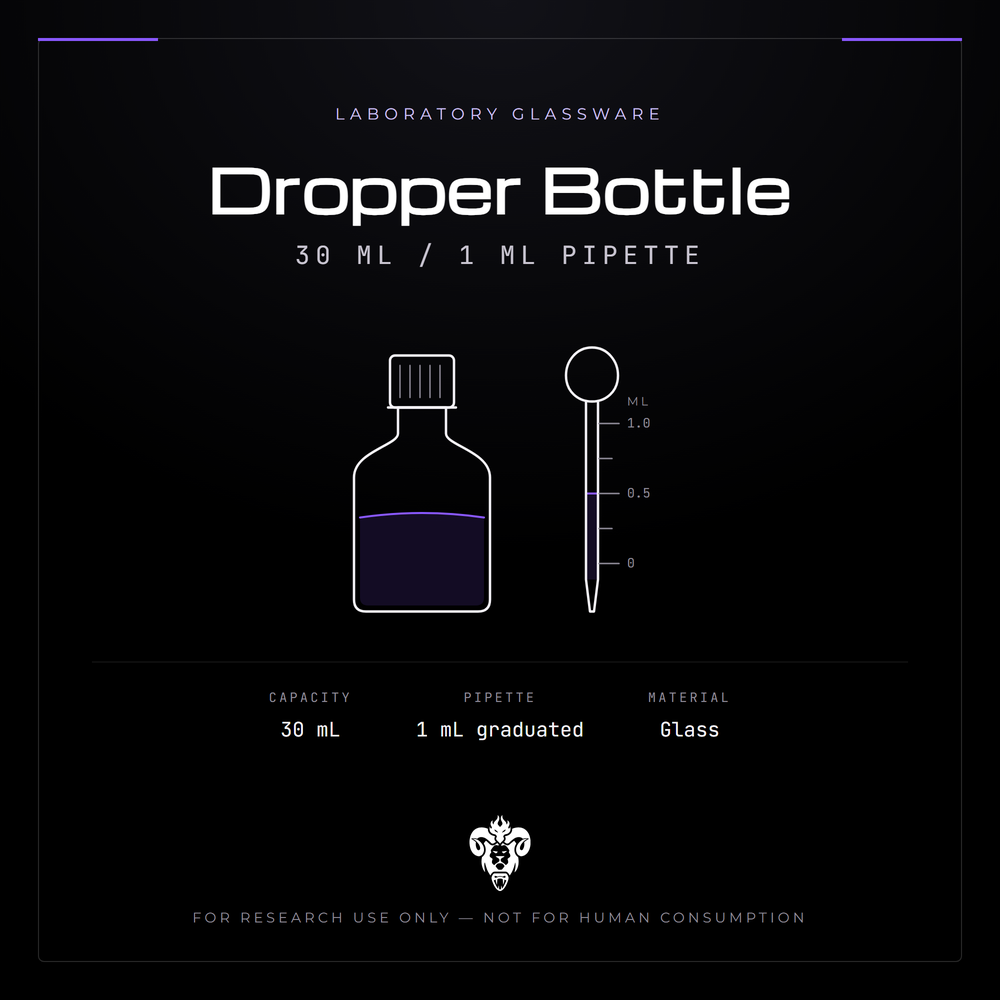
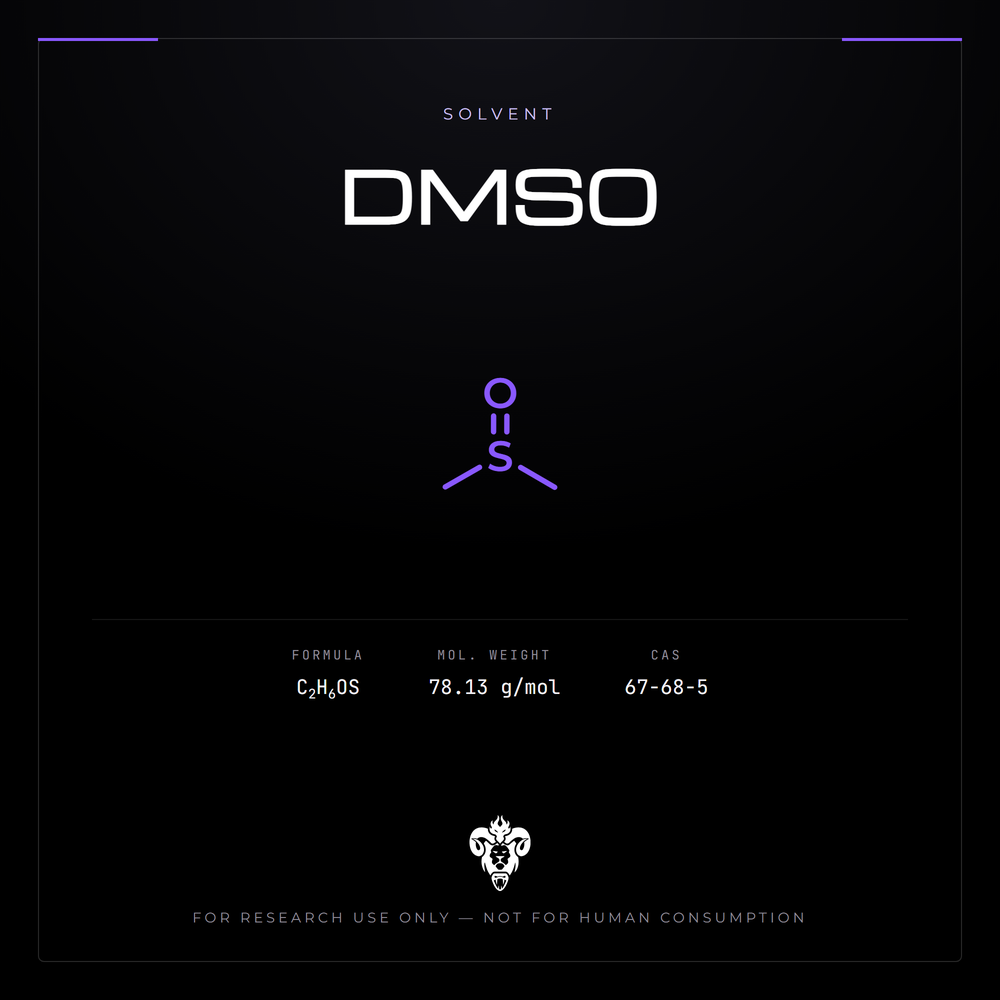
Dimethyl sulfoxide (CAS 67-68-5) is a polar aprotic organosulfur solvent, supplied here as a 30 mL bottle for laboratory use. Its combination of a highly polar sulfinyl group with two hydrophobic methyl groups is what lets it dissolve a wide range of otherwise poorly soluble polar and non-polar molecules, and that property is the reason it became the default vehicle for compound stocks in in vitro screening and the most widely used penetrating cryoprotectant in cell banking.[1,2]
Solvent Properties & Research Context
Broad solvation range. DMSO solubilises polar and non-polar solutes that resist aqueous and many organic solvents, which is why compound libraries are held as DMSO stocks and serially diluted into assay media.[1]
Penetrating cryoprotectant. DMSO is a standard cryoprotectant for adherent and suspension cell populations. Vehicle solutions formulated for sub-37 °C storage have retained population viability up to 75% of unfrozen controls, and adding serum to those formulations conferred no additional benefit — in some cases lowering post-thaw viability.[2]
Vehicle toxicity is real and concentration-dependent. This is the point most often missed in assay design. DMSO is commonly assumed benign below 10%, but cytotoxicity has been demonstrated in a retinal neuronal line above 1% (v/v) across annexin V, TUNEL, MTT and AlamarBlue readouts. At 2–4% the mechanism is caspase-3-independent cell death involving AIF translocation from mitochondria to nucleus and PARP activation.[1]
Assay design implication. The authors of that work recommend computing the absolute final DMSO concentration in every well and including an untreated control group alongside the DMSO vehicle control, so that solvent toxicity is measured rather than assumed away.[1]
Research Applications
Compound stock preparation. Dissolving poorly water-soluble research compounds for serial dilution into assay media.[1]
Vehicle controls. Matched-concentration solvent controls in cell-based assays, paired with an untreated arm.[1]
Cryopreservation. Penetrating cryoprotectant for cell line and primary cell banking.[2]
Solubility screening. Comparative solvation and formulation work against alternative vehicles.
Spectroscopy. Sample preparation where a high-boiling, aprotic, strongly solvating medium is required.
Analytical Documentation
Purity and water content vary by manufacturing lot, and water content matters for a hygroscopic solvent. Kimera Chems does not publish a single fixed purity figure for this item; refer to the batch-specific Certificate of Analysis (COA) issued for the lot received, which reflects third-party analytical testing for that lot.
References
- Galvao J, Davis B, Tilley M, Normando E, Duchen MR, Cordeiro MF. Unexpected low-dose toxicity of the universal solvent DMSO. FASEB J. 2014;28(3):1317–1330. doi:10.1096/fj.13-235440
- Campbell LH, Brockbank KGM. Serum-free solutions for cryopreservation of cells. In Vitro Cell Dev Biol Anim. 2007;43(8–9):269–275. doi:10.1007/s11626-007-9039-z
Storage & Handling
Store at room temperature. DMSO solidifies below about 18.5 °C. If it does, warm to room temperature and mix until clear. This is a physical change, not degradation.
Storage guidance is a house recommendation. Analytical documentation is per-lot release testing.