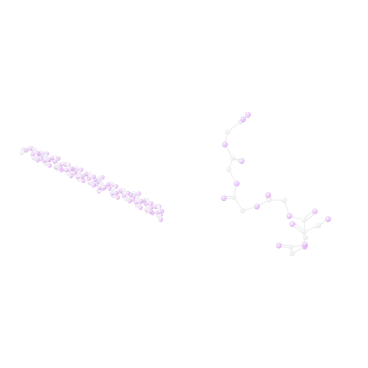
Calculated reference model · not an experimental or batch-certified structure. Backbone view: 176 of 347 atoms.
Model data & sources
- Full-length 43-residue, N-acetylated human Thymosin Beta-4; not the seven-residue TB-500 fragment.
- Calculated idealized conformer, not an experimentally measured isolated-peptide fold.
- Sequence
- SDKPDMAEIEKFDKSKLKKTETQEKNPLPSKETIEQEKQAGES
- Formula
- C212H350N56O78S
- Method
- PeptideBuilder idealized backbone / MMFF94s calculated reference conformer
TB-500 and Thymosin Beta-4 Are Not the Same Molecule
Thymosin Beta-4 Research Standard
Thymosin β-4 (CAS 77591-33-4) is a 5 mg lyophilized powder in a 3 mL vial. It is an actin monomer-sequestering protein — a defined biochemical function, not an inferred one — which makes it a genuine tool compound for cytoskeletal research.
Mechanism of Action & Research Context
-
Thymosin β-4 is an actin monomer-sequestering protein that controls cytoskeletal reorganisation.[1] Its role in migration cuts both ways: knocking it down with shRNA decreased tumour cell migration, adding it back increased migration, and it cooperates with HIF-1α to do so.[2]
-
Sequestration, not polymerisation. β-thymosins bind actin monomers, holding them out of the polymerising pool. The effect on the cytoskeleton is therefore indirect — it changes the available G-actin concentration rather than acting on filaments.[1]
-
Developmentally regulated expression. In rat cerebellum, β4 and β10 thymosin mRNAs were highest in postmitotic premigratory granule cells and fell as those cells migrated and differentiated, with both proteins present in elongating parallel fibres — consistent with a role in actin dynamics during migration and process extension.[1]
-
The caveat that belongs on this page. The migration Tβ4 promotes is not selectively the useful kind. shRNA knockdown decreased tumour cell migration; adding Tβ4 protein back increased it; and it cooperates with HIF-1α under hypoxia to do so. Any model where proliferating or transformed cells are present needs that accounted for rather than assumed away.[2]
Research Applications
Primary fields of in vitro laboratory investigation include:
-
Actin sequestration assays measuring G-actin availability and polymerisation kinetics.[1]
-
Wound-healing and scratch assays with knockdown and add-back arms.[2]
-
Hypoxia and HIF-1α interaction studies.[2]
-
Cytoskeletal imaging during cell migration and process extension.[1]
Analytical Documentation
Purity, identity and composition vary by manufacturing lot. Kimera Chems does not publish a single fixed purity figure for this item; refer to the batch-specific Certificate of Analysis (COA) issued for the lot received, which reflects third-party analytical testing for that lot.
References
- Border BG, Lin SC, Griffin WS, Pardue S, Morrison-Bogorad M. Alterations in actin-binding beta-thymosin expression accompany neuronal differentiation and migration in rat cerebellum. J Neurochem. 1993;61(6):2104–2114. doi:10.1111/j.1471-4159.1993.tb07448.x
- Ryu YK, Im YS, Moon EY. Cooperation of actin-sequestering protein, thymosin β-4 and hypoxia inducible factor-1α in tumor cell migration. Oncol Rep. 2010;24(5):1389–1394. doi:10.3892/or_00000997
Storage & Handling
Store at controlled room temperature, sealed and protected from light.
Storage guidance is a house recommendation. Analytical documentation is per-lot release testing.
Related Research Compounds
Research Use Only Disclaimer: This product is labeled and sold "For Research Use Only - NOT FOR HUMAN CONSUMPTION." It is not a drug, dietary supplement, food, cosmetic, or medical device, and it is not approved by the FDA or any other regulator for human or veterinary use. It is supplied to approved account holders as a research chemical for laboratory use and must be handled in accordance with applicable law.