Skip to content

Fladrafinil (CRL-40,941)
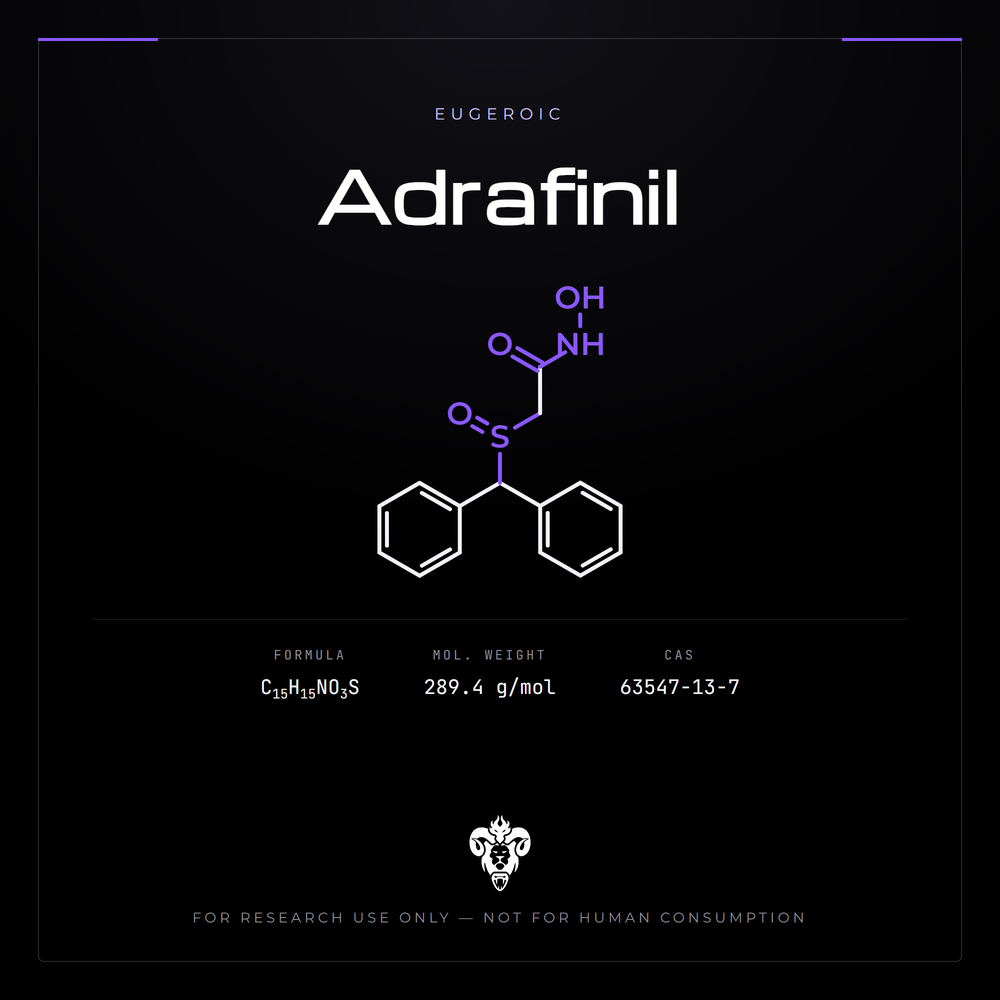
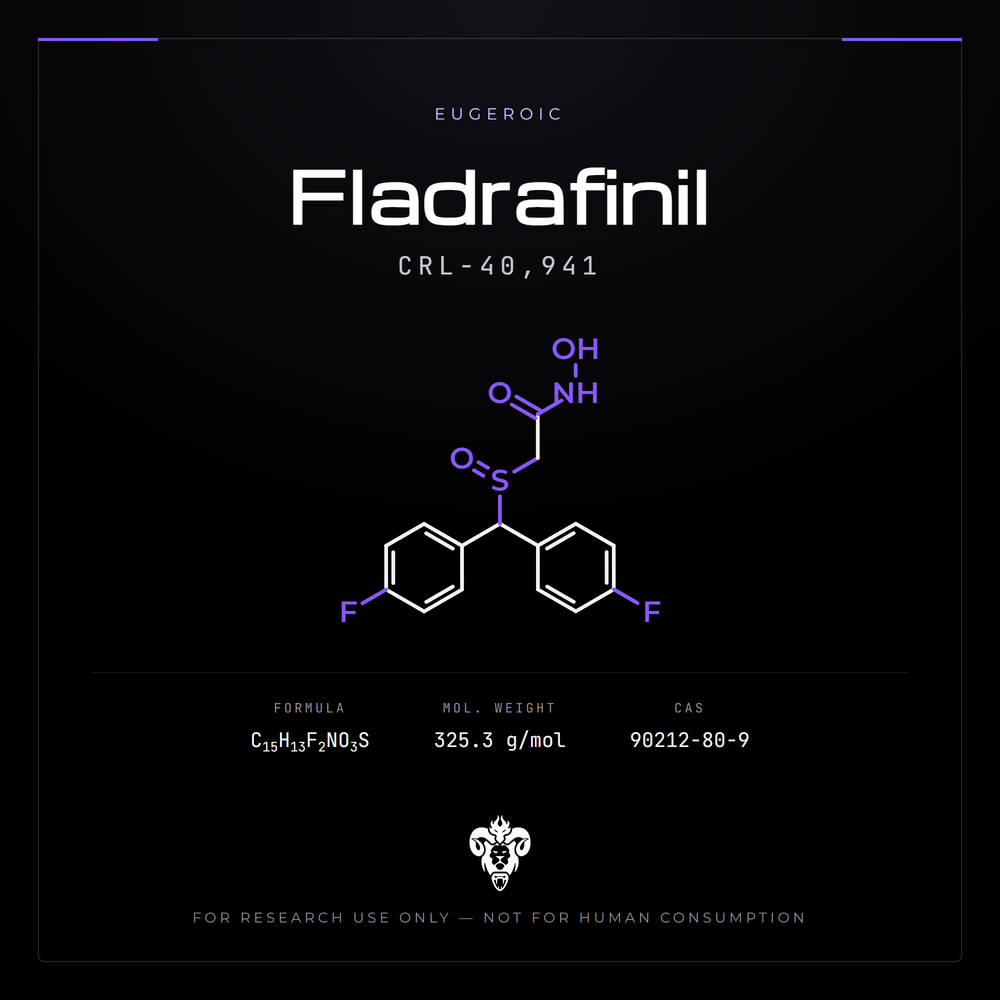
Fladrafinil, designated in pharmacological literature as CRL-40,941, is a synthetic fluorinated eugeroic compound structurally related to modafinil and adrafinil. It represents a modified bis(4-fluorophenyl)methylsulfinyl derivative featuring a terminal hydroxamic acid moiety. Within neurobiology and behavioral pharmacology research, fladrafinil is investigated as a high-precision reference standard for evaluating the central mechanisms of wakefulness, sustained vigilance, and psychostimulant kinetics. The strategic inclusion of twin para-fluorine atoms on its aromatic rings modifies the compound’s electronic configuration, altering its resistance to metabolic oxidation while enhancing central nervous system penetration parameters compared to non-fluorinated parent structures.
Physical & Handling Properties
| Property | Specification |
|---|---|
| Physical Appearance | White to off-white crystalline powder |
| Solution Base | PEG400, DMSO |
Research Applications & Mechanism of Interest
The primary value of fladrafinil in advanced laboratory settings centers on its selective interaction with central monoaminergic transporter systems to elevate extracellular neurotransmitter levels without triggering the severe autonomic overstimulation common to classical amphetamine-class psychostimulants.
Primary fields of preclinical and in vitro laboratory study include:
-
Dopamine Transporter (DAT) Binding Assays: Measuring competitive ligand binding affinities at the dopamine transporter site. Fladrafinil acts to partially block DAT, slowing the reuptake of endogenous dopamine and extending signaling periods within the synaptic cleft.
-
Vigilance and Wakefulness Modeling: Evaluating behavioral shifts and EEG sleep-wake architectures in animal models. Researchers utilize the compound to study long-term focus, task endurance, and resistance to induced fatigue markers.
-
Metabolic Resistance Profiles: Tracking the kinetic stability of di-fluorinated phenyl groups during exposure to hepatic microsomal enzymes. The strong carbon-fluorine bonds are studied for their role in delaying standard metabolic clearance loops.
-
Orexinergic and Histaminergic Synergy: Investigating secondary downstream activations within the tuberomammillary nucleus and lateral hypothalamus to observe how DAT inhibition indirectly balances sleep-regulating peptide signals.
Storage & Handling Guidelines
Store at controlled room temperature. Keep tightly closed. Liquid formats: do not refrigerate or freeze. Cold storage may cause the solution to cloud or precipitate. If this occurs, return to room temperature and mix until clear.
Storage guidance is a house recommendation. Analytical documentation is per-lot release testing.
Related Research Compounds
Research Use Only Disclaimer: This product is labeled and sold “For Research Use Only — NOT FOR HUMAN CONSUMPTION.” It is not a drug, dietary supplement, food, cosmetic, or medical device, and it is not approved by the FDA or any other regulator for human or veterinary use. It is supplied to approved account holders as a research chemical for laboratory use and must be handled in accordance with applicable law.