Skip to content

GGN: Synergistic Neuro-Modulatory Matrix (Optimized Research Reference)
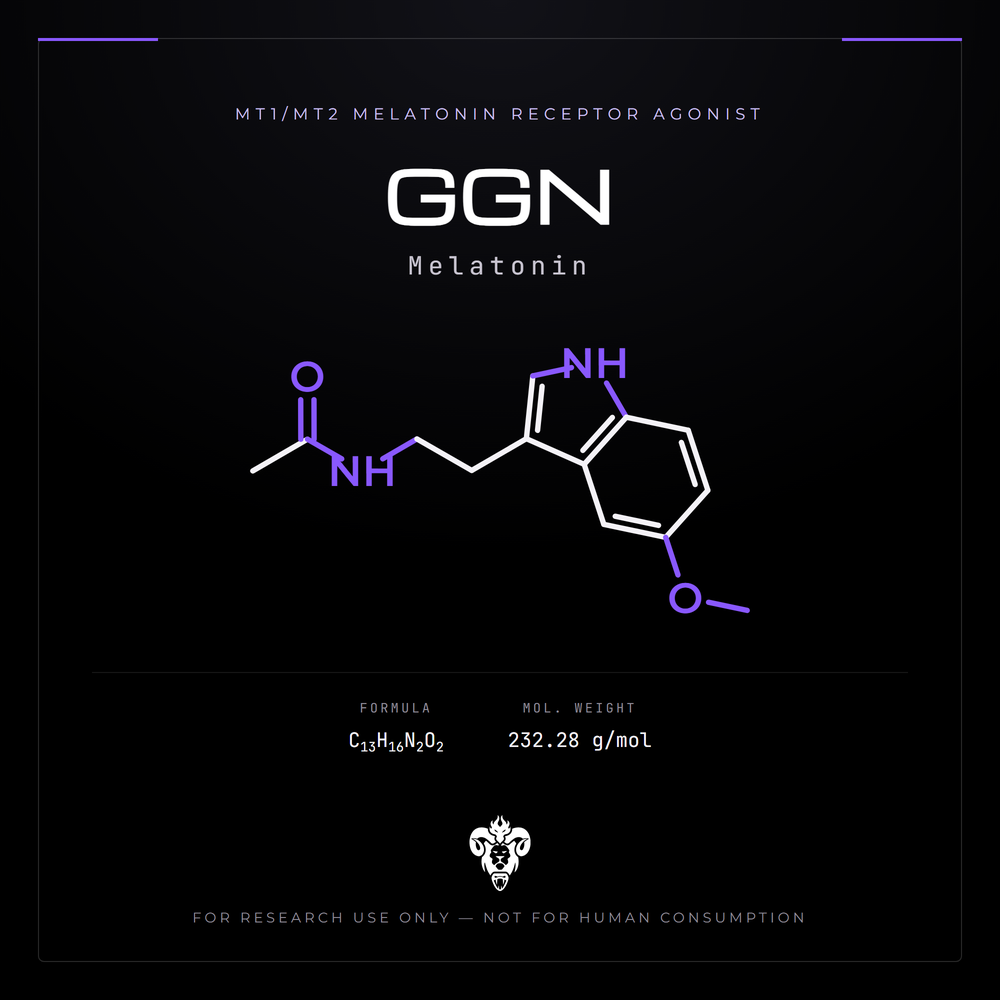
GGN is a standardized, multi-component solution specifically engineered for investigating complex neurochemical crosstalk. By integrating melatonin within a precise matrix of inhibitory neurotransmitters and neuromodulatory amino acids (GABA, L-Theanine, Taurine, and L-Histidine), GGN provides a controlled biochemical environment for researchers to establish non-linear, synergistic interaction profiles that isolated single-ligand assays cannot replicate.
This formulation is optimized for Concentration-Response (C-R) studies, serving as a stable baseline for establishing EC₅₀ shifts when comparing melatonin’s activity in isolation versus its performance within an integrated amino acid matrix.
Analytical Formulation Matrix
Each milliliter of the solution is prepared in a deionized water base with 1% benzyl alcohol, calibrated to the following concentrations:
| Component | Function within Matrix | Concentration (per mL) |
|---|---|---|
| Melatonin | Circadian Signaling / MT1/MT2 Ligand | 200 mcg |
| GABA | Primary Inhibitory Neurotransmitter | 100 mg |
| L-Histidine | Histamine Precursor / Neuro-modulator | 100 mg |
| Taurine | Osmotic Regulator / Neuromodulator | 100 mg |
| L-Theanine | Alpha-wave / Neurotransmitter Balancer | 50 mg |
Experimental Utility: EC₅₀ Shift Modeling
GGN is primarily intended for use in comparative pharmacological assays designed to isolate the potential potentiation of melatonin by its accompanying matrix.
-
Potentiation Mapping: Enables researchers to conduct parallel concentration-response curves to quantify potential left-ward shifts in the EC₅₀ of melatonin when sequestered within the GGN matrix, providing a clear numerical value for synergistic efficacy.
-
Signaling Cross-talk: Facilitates the study of how GABAergic inhibitory tone and taurine-mediated osmotic regulation concurrently influence the downstream sensitivity of the circadian pathway.
-
Matrix Baseline Control: Provides a standardized reference for establishing a “matrix effect” baseline, allowing for the subtraction of individual amino acid noise to isolate specific melatonin-matrix interactions.
Storage & Handling Guidelines
Store at controlled room temperature.
Storage guidance is a house recommendation. Analytical documentation is per-lot release testing.
Related Research Compounds
Analytical Documentation
Purity, identity, and composition vary by manufacturing lot. Kimera Chems does not publish a single fixed purity figure for this item; refer to the batch-specific Certificate of Analysis (COA) issued for the lot received, which reflects third-party analytical testing for that lot. Contact us if a COA for your lot is required.
Research Use Only Disclaimer: This product is labeled and sold “For Research Use Only — NOT FOR HUMAN CONSUMPTION.” It is not a drug, dietary supplement, food, cosmetic, or medical device, and it is not approved by the FDA or any other regulator for human or veterinary use. It is supplied to approved account holders as a research chemical for laboratory use and must be handled in accordance with applicable law.