Skip to content
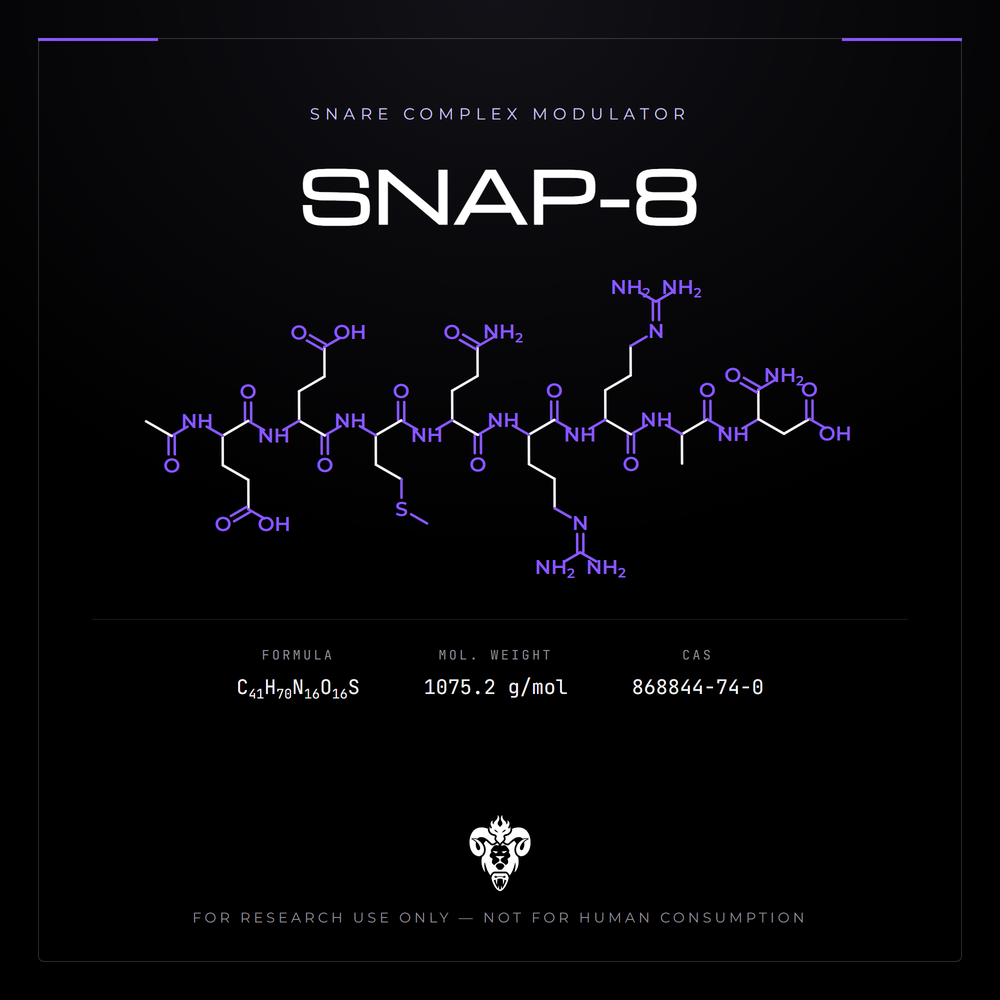

SNAP-8 (Acetyl Octapeptide-3) Research Standard
SNAP-8 (Acetyl Octapeptide-3) is a synthetic, acetylated octapeptide utilized in laboratory research as a model for exploring peptide chain behavior and molecular association. Characterized by a specific eight-amino-acid sequence with an N-terminal acetyl group, this peptide is engineered to facilitate investigation into how amino acid side chains mediate specific contacts within binding pockets or isolated protein environments. In laboratory settings, SNAP-8 serves as a reference material for mapping structural stability in various buffer systems and evaluating the kinetics of peptide-target interactions in controlled in vitro models.
Additional Properties
| Property | Specification |
|---|---|
| Sequence | Acetylated octapeptide chain |
| Physical Appearance | White lyophilized powder |
Mechanism of Action & Research Context
SNAP-8 is primarily studied for its physical and structural properties as a synthetic peptide sequence.
-
Molecular Association: The peptide’s eight-amino-acid chain, coupled with its acetylated terminus, is designed to mimic specific structural motifs. Researchers use it to investigate how these chains associate with isolated targets in cell-free systems.
-
Structural Stability: A core area of research involves monitoring how the peptide maintains its arrangement within different buffer systems over time. This helps researchers determine the environmental factors that influence peptide folding and stability.
-
Binding Mapping: The amino acid side groups are utilized to create specific points of contact at binding areas, allowing scientists to measure and map these interactions in a controlled, solution-based laboratory environment.
Research Applications
SNAP-8 is a specialized reagent used to explore peptide dynamics and chain-interaction pathways.
Primary fields of in vitro laboratory investigation include:
-
Chain Association Studies: Evaluating the peptide’s behavior and affinity when introduced to isolated protein preparations.
-
Structural Configuration Analysis: Reviewing the peptide’s form and arrangement in varying aqueous environments.
-
Stability & Kinetics: Monitoring the degradation and stability of the peptide chain in buffered systems under specific experimental conditions.
-
Kinetic Data Collection: Recording rates of interaction between the peptide and target surfaces to further map peptide-ligand dynamics.
Storage & Handling Guidelines
Store at controlled room temperature, sealed and protected from light.
Storage guidance is a house recommendation. Analytical documentation is per-lot release testing.
Related Research Compounds
Research Use Disclaimer
Research Use Only Disclaimer: This product is labeled and sold “For Research Use Only — NOT FOR HUMAN CONSUMPTION.” It is not a drug, dietary supplement, food, cosmetic, or medical device, and it is not approved by the FDA or any other regulator for human or veterinary use. It is supplied to approved account holders as a research chemical for laboratory use and must be handled in accordance with applicable law.