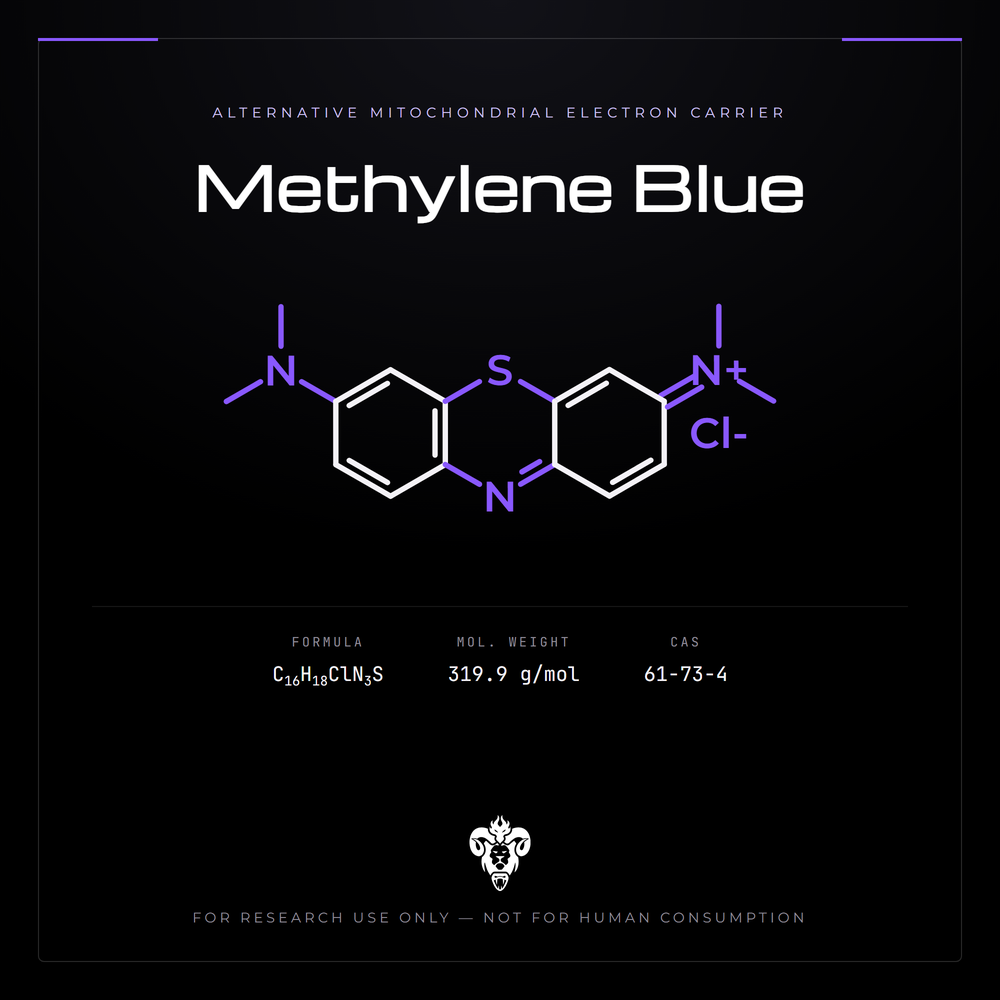

Methylene Blue (Redox Research Agent)
Methylene Blue (Methylthioninium chloride) is a phenothiazinium dye utilized extensively in biochemical research as a potent redox agent. It functions as an electron carrier, making it a critical tool for studying electron transport chain dynamics, mitochondrial respiration, and cellular metabolic pathways. Due to its unique ability to undergo reversible reduction, it is widely applied in in vitro models to track electron flow and examine the mechanics of oxidative stress and cellular energy metabolism.
Technical Specifications
| Property | Specification |
|---|---|
| Product Name | Methylene Blue |
| Chemical Formula | C16H18CIN3S |
| Appearance (Solid) | Dark Brown powder |
| Appearance (Solution) | Bright blue |
| Purity Standard | Refer to the batch-specific Certificate of Analysis (COA) supplied for the lot received |
| Solution Base | Distilled Water, Potassium Sorbate, Sodium Benzoate, TEA |
Research Applications
Methylene Blue is a versatile probe used to manipulate and monitor the redox state of biological systems in controlled environments.
Primary fields of in vitro laboratory investigation include:
-
Energy Production: Studying electron transfer within the mitochondrial electron transport chain.
-
Neurobiological Investigation: Examining neuronal activity, enzymatic inhibition, and oxidative pathways in brain cell models.
-
Cell Aging: Utilizing the compound in research models to investigate cellular senescence and mitochondrial decline.
-
Cell Stress: Assessing cellular response to oxidative stress and redox-mediated signaling.
-
Oxygen Dynamics: Measuring and monitoring oxygen levels within specific cell-free and cellular models.
Storage & Handling Guidelines
Store at controlled room temperature. Keep tightly closed. Liquid formats: do not refrigerate or freeze. Cold storage may cause the solution to cloud or precipitate. If this occurs, return to room temperature and mix until clear.
Storage guidance is a house recommendation. Analytical documentation is per-lot release testing.
Related Research Compounds
Research Use Disclaimer
Research Use Only Disclaimer: This product is developed and distributed strictly as a Research Use Only (RUO) laboratory reference chemical intended exclusively for non-clinical analytical and scientific investigation. It is not an FDA-approved drug, medical treatment, dietary supplement, or food ingredient, and is strictly prohibited for human or animal consumption. Methylene Blue must be handled according to all local safety laws and institutional regulations. Kimera Chems supplies this reagent solely to qualified researchers and scientific institutions.