
GB-115
GB-115 is a synthetic retro-dipeptoid recognized in pharmacological literature as a high-affinity central antagonist of the cholecystokinin-1 (CCK-1) receptor. Developed through the Zakusov Institute’s specialized dipeptoid research program, the molecule features a unique “retro” backbone—a reversed peptide-bond orientation relative to the native cholecystokinin fragment. This structural modification confers robust resistance to endogenous proteolytic degradation while simultaneously preserving precise receptor recognition parameters. Within neuropharmacology and behavioral research models, GB-115 serves as a critical reference ligand for investigating CCK-mediated signaling, specifically regarding its anxiolytic potential and its role in central nervous system homeostasis.
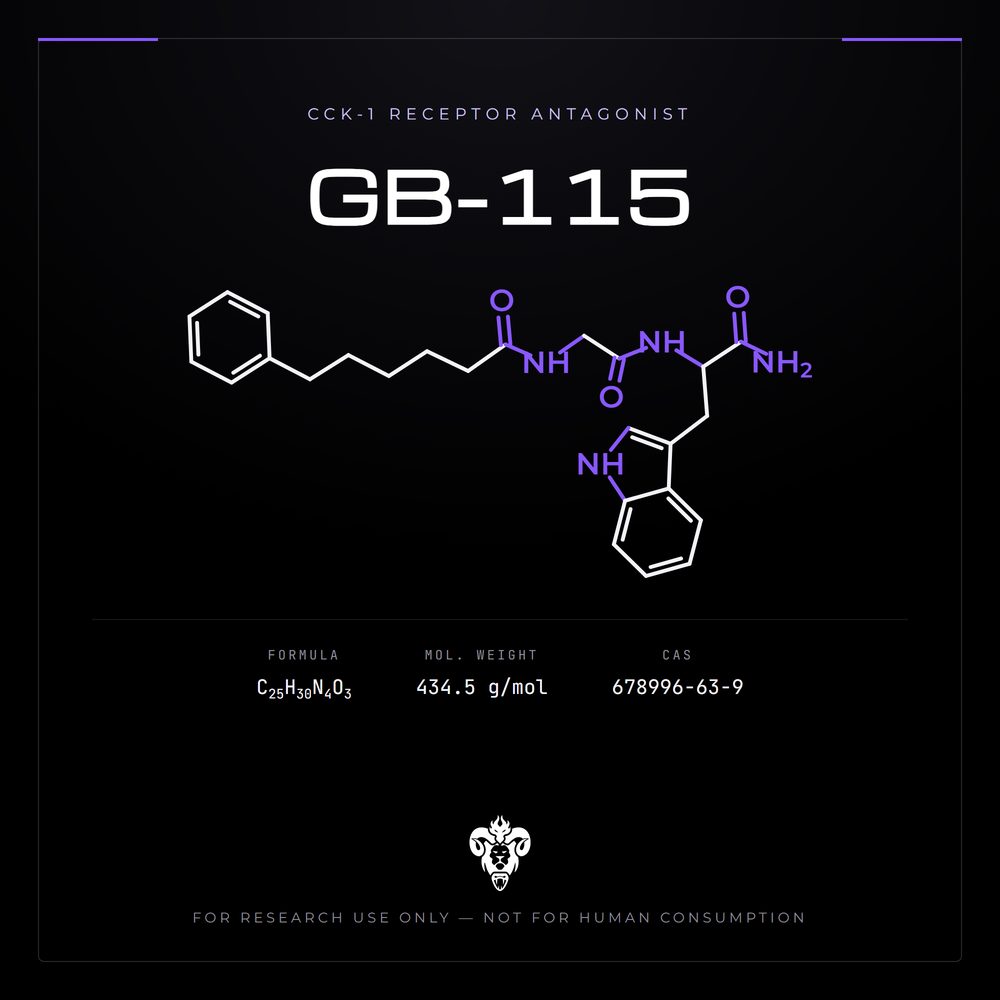
Structural Attributes to Note: The analytical diagram above details the N-phenylhexanoyl glycyl-tryptophan amide scaffold. The “retro” configuration is key to the molecule’s experimental utility: by inverting the sequence of the standard peptide backbone, the molecule retains the critical pharmacophore required to dock into the CCK-1 binding pocket, yet it remains effectively invisible to the degradative enzymes that would otherwise rapidly catabolize a traditional linear peptide in in vitro assay environments.
Additional Properties
| Property | Specification |
|---|---|
| Backbone | N-phenylhexanoyl glycyl-tryptophan amide |
| Physical Appearance | White to off-white solid powder |
| Solution Base | PEG400, Ethanol |
Research Applications & Mechanism of Interest
The primary scientific value of GB-115 in laboratory research is its selective and metabolically stable antagonism of the cholecystokinin-1 receptor subtype within the central nervous system.
Primary fields of preclinical and in vitro laboratory investigation include:
-
CCK-1 Receptor Binding Kinetics: Utilizing membrane preparations to measure the competitive displacement of native CCK ligands by GB-115. These assays are essential for charting receptor occupancy rates and binding affinities in neurological tissue models.
-
Receptor Selectivity Profiling: Performing comparative assays to map the selectivity of GB-115 against related receptor subtypes (e.g., CCK-1 vs. CCK-2), ensuring rigorous experimental control in signaling models.
-
Comparative Pharmacology: Serving as a standard structural benchmark in neurobiological screening panels to evaluate how different dipeptoid architectures modulate anxiety-like behavioral markers.
-
Proteolytic Stability Benchmarking: Using GB-115 as a model system to study how reversed peptide-bond orientations (retro-dipeptoids) successfully evade standard peptidase activity compared to linear, native-sequence fragments.
Storage & Handling Guidelines
Store at controlled room temperature. Keep tightly closed. Liquid formats: do not refrigerate or freeze. Cold storage may cause the solution to cloud or precipitate. If this occurs, return to room temperature and mix until clear.
Storage guidance is a house recommendation. Analytical documentation is per-lot release testing.
Related Research Compounds
Further reading: GB-115 research overview
Research Use Only Disclaimer: This product is labeled and sold “For Research Use Only — NOT FOR HUMAN CONSUMPTION.” It is not a drug, dietary supplement, food, cosmetic, or medical device, and it is not approved by the FDA or any other regulator for human or veterinary use. It is supplied to approved account holders as a research chemical for laboratory use and must be handled in accordance with applicable law.